
Custom Millwork: How to Choose Options for Your Project
Considering custom millwork for your next project? Millwork is a blanket term for woodwork and Osborne offers an incredible selection of high-quality wooden components to complete a unique millwork design. You can find everything from corbels to moulding to wall panelling within our inventory. However, we know that many customers want to personalize their design even further which is why we offer several milling and customization options. Here’s everything you need to know to choose the right options for your needs.
What Is Custom Millwork?
Typical mills produce large lots of the same, medium-quality pieces. On the other hand, custom millwork is rising in popularity because it meets the specific requests of each customer with high-quality materials.
Osborne Wood components, for example, are known for superior craftsmanship, with handcrafted details, durable joinery, and long-lasting materials.

Types of Custom Millwork
Although Osborne offers an expansive selection of stock components, the majority of items can also be customized according to your build specifications.. The following pieces are commonly used in home projects:
Quarters
The component is split into quarters. The original piece must have a symmetrical design. The resulting quarters exclude the saw blade’s width.
Quarter Notch
A quarter notch involves removing ¼ of the leg. This can aid in corner installations on islands, vanities, cabinets, dressers and more.
Rectangular Split
When you cut the leg lengthwise from top to bottom, you create a rectangular split. This is useful in applications where the face of the leg will be used as a decorative element. After splitting the item, both pieces are shipped to the customer. Please note, the resulting halves exclude the saw blade’s width.
Diagonal Split
The leg will be split into two equal sections diagonally. After cutting a diagonal split, the millwork company sends both pieces to the customer. Please note that the resulting halves will exclude the saw blade’s width.

Trim Leg
You can customize the height of your leg by requesting a trim at the top and/or bottom of the turning.
Chamfer
Adding a chamfer for the top square of your leg is another option. A 45° angle is cut into the inner 90° corner so that there is a flat face on the transitional edge. This aids in hardware installation, especially when utilizing table aprons. Common chamfer dimensions are ¾” wide by 4” tall. The leg chosen for modification must be able to accommodate these dimensions.
Skirt Legs
Custom skirt sets include the legs. When buying the legs separately, we’ll use your dimensions to match the mortises to the tenons on the skirt board. We then chamfer the corner and include a threaded insert.
Electrical Receptacle Notch
The leg will have a 1” hole drilled through the center from top to bottom. An empty junction box is then added to the leg. The receptacle notch gets centered in the top block of the leg at a distance of 1 ¾” from the top. It will have a length of 3” and a width of 2” with a 2 ¼” depth. The top block of the item must be at least 5” tall and 3” wide to accommodate the receptacle box.
Horizontal Keyhole
You can have a corbel customized with a horizontal keyhole, if desired.
Drill Hole
You might need a hole for installing millwork hardware. A depth of less than 3 ¾” at the top or bottom typically works best.
Shelf Notch
Installing a shelf notch in the bottom block of a piece is a handy option. The notch will meet your specification of distance from floor and thickness of the notch, so a CAD drawing will need to be created and approved for this request.
Mortise
A mortise is a recessed area that is often paired with a tenon to create a durable joint Standard mortises are 3” long, with ⅜” widths and depths of ⅞”.They are typically placed on two adjacent sides. Custom sizes and placement can be requested.
Through Hole
For legs with a 1.75” width or greater, you can have a 1” hole drilled into the center of the leg. The hole is created from the top to the bottom to the leg.
Custom Milling
These are only some of the options you have with custom milling. Reach out to our team to discuss your specific project.
How to Choose Custom Millwork Options
An important part of using custom millwork involves choosing each piece with intention.

Hand Selection
An Osborne Wood expert can hand-pick your pieces if inventory allows. For instance, you might select pine with fewer knots or a lighter tone for maple pieces.
Solid Wood Selection
Depending on availability, we can provide solid stock for pieces with widths of 3.5” or less.
This is only available in limited wood types.
Wood Species
We offer products in the following species of wood:
Poplar
Maple (Hard and Soft)
Oak (Red, White, Quarter-Sawn and Rift-Sawn)
Cherry
Mahogany
Alder (Plain & Rustic)
Hickory
Beech
Black Walnut
Knotty Pine
Cedar (Spanish & Western Red)
If you’re interested in a different wood species, ask an Osborne Wood representative.
Other Factors to Consider
When choosing wood, consider these traits:
|
|
Keep in mind that each type of wood will have unique characteristics.
Matching Millwork to Project Style
The type of project will impact your millwork choices, which range from:
| Traditional | Modern | Rustic |
| Coastal | Transitional | Farmhouse |
View our collections for inspiration based on design style. Be sure to consider your desired home style when selecting components and incorporating custom millwork.
The Benefits of Going Custom
Here are a few benefits of going custom, commonly favored by DIYers and builders.
Tailored to Your Design Vision
You can eliminate waste by specifying your dimensions, wood species, and pattern.
Adds Home Value & Uniqueness
Give your home an original look that adds to its beauty. When selling a house, custom millwork can increase its value.
Easier Integration With Existing Architecture
Get pieces that fit well with the rest of the home’s unique architecture, including any historic pieces.
Why Builders and DIYers Choose Osborne Wood
In addition to our superior products, builders and DIYers enjoy our wide range of options. Osborne Wood stands behind our products with dedicated, knowledgeable, and friendly customer service.
How to Order Custom Items From Osborne Wood
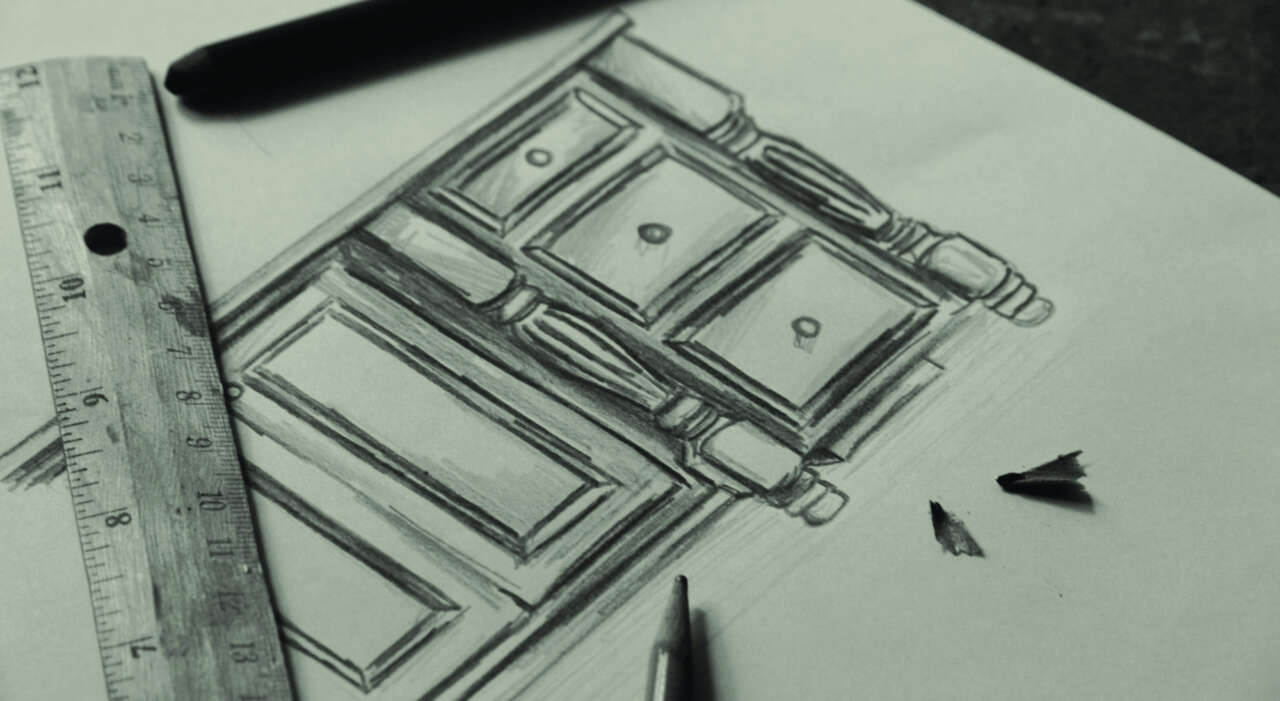
Here’s how our process works:
Custom Quote: Fill out our custom quote request form or email us at [email protected] with your request. Include a picture, dimensions, wood species, and the quantity of pieces
Pricing: In 1-2 business days, you’ll receive the pricing and lead time
Approval: After you approve the quote, your account gets updated or initiated
CAD Drawing: Pay a setup fee to start the CAD drawing process
CAD Approval: Receive the CAD drawing for review. Once correct and approved, a 50% deposit is taken and the order is submitted for production.
Production and Shipping: We will complete your custom order within the given lead time and the finished product will be shipped your way!
Connect with our customer service team to begin this process.
Custom Services
We use your designs and dimensions to create your personalized pieces, and we offer customization services for our standard pieces as well.
Lead Times and Shipping
Lead times and shipping will vary based on each order, and every quote includes these estimates.
Need to Draft Your Own Woodworking Components?
When you want to draft your own woodworking components, you can work with our drafting team to bring your vision to life!
Start Your Custom Project With Superior Quality Wood
When you partner with Osborne Wood, you can trust that you’ll receive superior-quality pieces, every time. Browse our custom millwork options to discover the variety of products we offer, or speak with a product specialist today!