1. Resources

Wood Types

Return to the

Wood Types for

Alder

Characteristics of Alder

Hardness
  • Moderately soft hardwood (softer than soft maple but harder than pine)

  • Janka density rating of 590 lbf

    • The Janka Hardness Scale measures the durability of wood by determining the force needed to embed a steel ball into the wood. Find out more about this scale here.

Appearance
  • Light tan to reddish-brown in color

  • Straight grain with a fine, uniform texture

  • Heartwood and sapwood are nearly identical in color

  • Small, tight, closed knots may be present but are uncommon

  • Standard products will be laminated

Workability
  • Extremely easy to work with using both hand and machine tools

  • Sands easily, turns well, and has excellent gluing properties

Finishing
  • Considered a stain-grade and paint-grade option

  • Finishes exceptionally well - often stained to mimic more expensive woods like cherry

Sustainability
  • Not listed as threatened due to its abundance across its native range in western North America

  • This fast-growing wood is considered a sustainable choice for manufacturing

Customization Options

  • Hand select services may be available for an additional fee
  • Please contact our customer service team for more information


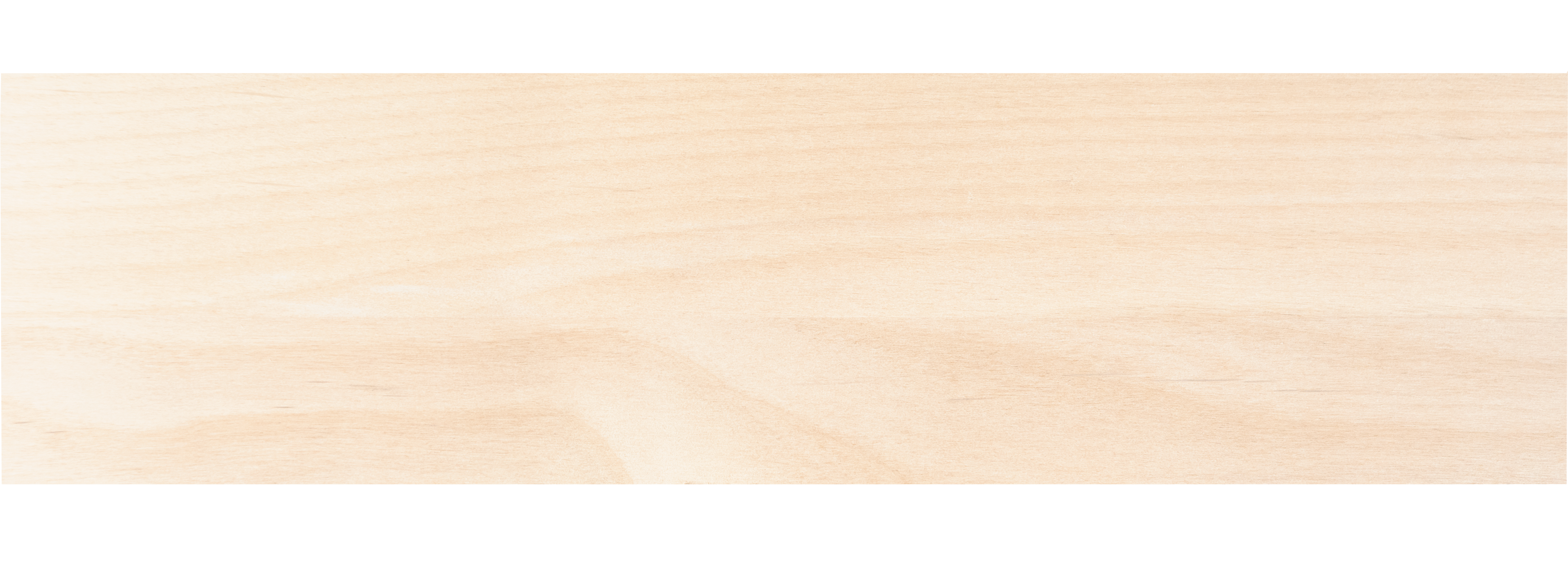
Example of Laminate:


Wood Types for

Basswood

Characteristics of Basswood

Hardness
  • Moderately soft hardwood

  • Janka density rating of 410 lbf

    • The Janka Hardness Scale measures the durability of wood by determining the force needed to embed a steel ball into the wood. Find out more about this scale here.

Appearance
  • Pale white/cream to light brown in color

  • Straight grain with a fine, even texture

  • Small, tight, closed knots may be present but are uncommon

  • Standard products will be laminated

Workability
  • Extremely easy to work with using both hand and power tools
Finishing
  • Can be painted or stained depending on personal preference
Sustainability
  • This fast-growing wood is a highly sustainable choice
Customization Options
  • Hand select services may be available for an additional fee
  • Please contact our customer service team for more information


Wood Types for

Beech

Characteristics of Beech

Hardness
  • Comparable to hard maple and slightly harder than red oak

  • Janka density rating of 1,300 lbf

    • The Janka Hardness Scale measures the durability of wood by determining the force needed to embed a steel ball into the wood. Find out more about this scale here.

Appearance
  • Pale straw color, sometimes with a pink or brown hue

  • Fine, tight grain often with medullar rays present (bands or flecks in the wood)

  • Standard products will be laminated

Workability
  • Overall good workability. Machines, glues, and turns well
Finishing
  • Can be painted or stained depending on personal preference

  • Stains specifically well in all tones, but looks best with a natural finish

Sustainability
  • Due to rapid regeneration, this is a highly sustainable option
Customization Options
  • Hand select services may be available for an additional fee
  • Please contact our customer service team for more information


Wood Types for

Cherry

Characteristics of Cherry

Hardness

  • Moderate hardness

  • Janka density rating of 950 lbf
    • The Janka Hardness Scale measures the durability of wood by determining the force needed to embed a steel ball into the wood. Find out more about this scale here.

Appearance

  • Heartwood is a rich reddish-brown color that darkens with age. Sapwood is a pale pinkish-yellow and typically makes up 25-30% of the product

  • Straight grain with a fine, even texture

  • Standard products may be solid or laminate depending on availability

Workability

  • Generally easy to work with hand or machine tools

Finishing

  • Can be painted, but it is often stained with a natural finish or other tone for the best result

Sustainability

  • When sourced from managed forests in North America, this is a sustainable wood option

Customization Options

  • Hand select services may be available for an additional fee. Some common requests are:
    • Least amount of sapwood

    • Most color matching

  • A custom quote can be created for items made with no sapwood

  • Solids only can be requested for products up to 3 ½” wide (if available)

  • Please contact our customer service team for more information


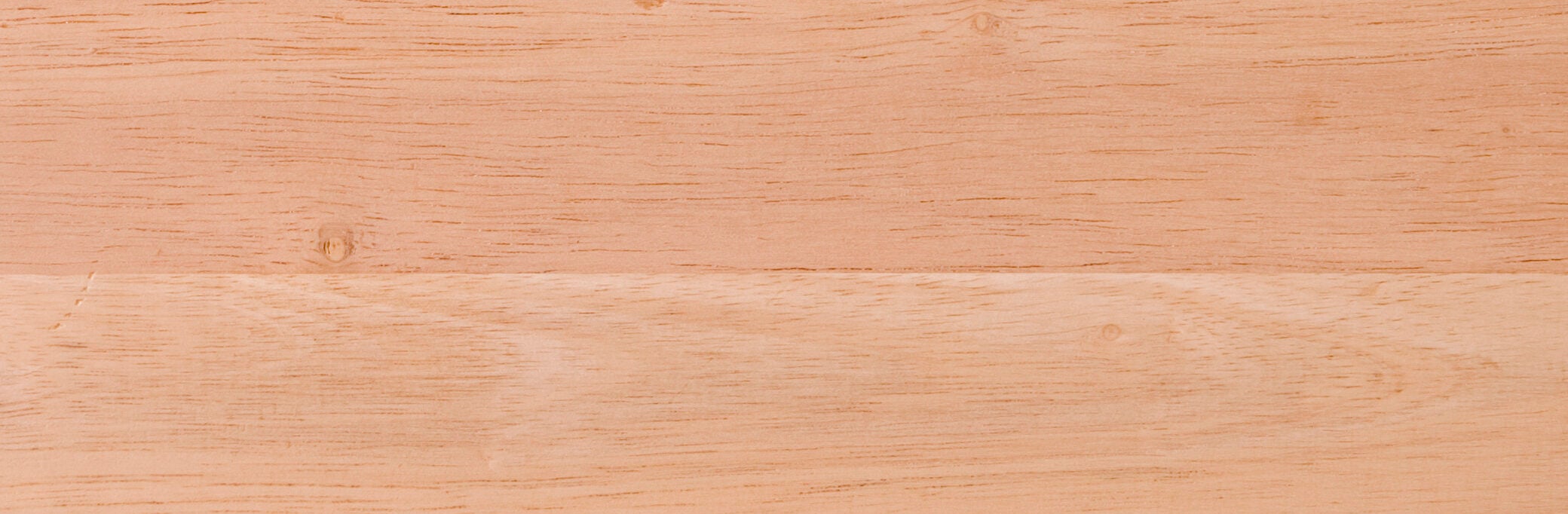
Example of Laminate:


Wood Types for

Hard Maple

Characteristics of Hard Maple

Hardness

  • Second hardest wood available from Osborne

  • Offers excellent durability and resistance to dents or scratches

  • Janka density rating of 1,450 lbf
    • The Janka Hardness Scale measures the durability of wood by determining the force needed to embed a steel ball into the wood. Find out more about this scale here.

Appearance

  • It is important to note that this is not a distinct species. “Hard maple” is a name generally assigned to a variety of maple species that have similar properties beneficial in furniture making

  • Light, creamy white to reddish-brown in color

  • Can include anything from small streaks to larger areas of color variation

  • Straight grain with a fine, even texture

  • Standard products may be solid or laminate depending on availability

Workability

  • Easy to work with and machine. Glues and turns well

  • Smooth surface allows for easy finishing

  • Suitable for intricate carving

Finishing

  • Can be stained or painted, depending on your preference

Sustainability

  • Abundantly available in North America making it a sustainable choice

Customization Options

  • Hand select services may be available for an additional fee

  • Solids only can be requested for products up to 3 ½” wide (if available)

  • Please contact our customer service team for more information


Example of Laminate:


Wood Types for

Hickory

Characteristics of Hickory

Hardness

  • Extremely hard wood and the strongest offered at Osborne

  • Janka density rating of 1,820 lbf
    • The Janka Hardness Scale measures the durability of wood by determining the force needed to embed a steel ball into the wood. Find out more about this scale here.

Appearance

  • Often a mix of hickory and pecan woods

  • High color variations often create a striped appearance

  • Heartwood is light to medium brown with reddish hues

  • Sapwood is pale yellowish-brown in color

  • Straight grain with occasional waves and a coarse texture

  • Standard products will be laminated

Workability

  • Can be difficult to work with because of its high density

  • Tends to dull cutting edges quickly and can cause tear-out

Finishing

  • Best suited for staining due to grain and color variations

Sustainability

  • Widely available in North America making it a sustainable option

Customization Options

  • Hand select services may be available for an additional fee. Some common requests are:
    • Darker coloring

    • Most color matching

  • Please contact our customer service team for more information


Example of Laminate:


Wood Types for

Mahogany, Sapele

Characteristics of Mahogany

Hardness

  • Moderately hard compared to other hardwoods

  • Janka density ratings range depending on species from 830-1,410 lbf
    • The Janka Hardness Scale measures the durability of wood by determining the force needed to embed a steel ball into the wood. Find out more about this scale here.

Appearance

  • Heartwood is a rich reddish-brown color and the sapwood is a pale pinkish-brown

  • Often has a straight, uniform grain but can be irregular at times

  • Products may include as much as 25-30% sapwood

  • Standard products will be laminated

Workability

  • Excellent workability; easy to sand, machine and carve

Finishing

  • Takes stains very well as it enhances the natural beauty of the wood

  • Can also be finished with oils or varnishes to highlight the grain and color

Sustainability

  • Sustainable challenges exist for certain mahogany species but when sourced responsibly, it can be a readily available option with a lower environmental impact

Customization Options

  • Hand select services may be available for an additional fee. Some common requests are:
    • Least amount of sapwood

    • Most color matching

  • A custom quote can be created for items made with no sapwood

  • Please contact our customer service team for more information

Example of Laminate:

Wood Types for

Pine (May include natural knots)

Characteristics of Knotty Pine

Hardness

  • Soft, lightweight wood

  • This is the only softwood Osborne offers due to its prominence in furniture applications

  • Janka density rating of 420 lbf
    • The Janka Hardness Scale measures the durability of wood by determining the force needed to embed a steel ball into the wood. Find out more about this scale here.

Appearance

  • Ranges in color from pale yellow to light brown, with occasional reddish-brown streaks

  • Straight, even grain with a medium to fine texture

  • Often has knots and resin pockets

Workability

  • Easy to work with using both hand and power tools

  • Cuts and shapes smoothly, though care should be taken around knots to avoid tear-out

Finishing

  • Often considered a stain-grade option, however for a more rustic, farmhouse look, it can be painted

  • If painted, the knots will show through over time.

Sustainability

  • Grows in North America making it a renewable and sustainable resource

Customization Options

  • Hand select services may be available for an additional fee. Some common requests are:
    • More knots

    • Less knots

  • Please contact our customer service team for more information


Example of Laminate:


Wood Types for

Poplar (paintgrade)

Characteristics of Poplar

Hardness

  • Soft for a hardwood and comparable to many softwoods in density/hardness

  • Janka density rating of 540 lbf
    • The Janka Hardness Scale measures the durability of wood by determining the force needed to embed a steel ball into the wood. Find out more about this scale here.

Appearance

  • Light colored with creamy white sapwood and pale yellowish-brown to olive green heartwood

  • Fine, uniform texture with straight grain

  • Standard products will be laminated
    • No limits to the number or direction of laminates

    • No restrictions on the use or color of putty and/or filler

Workability

  • Very easy to work with hand or machine tools
    • Can leave fuzzy surfaces when machined which requires fine sanding for smoothness

  • Cuts, glues and finishes well

Finishing

  • Recommended for painting due to the composition (laminated with putty/filler)

  • May require fine sanding due to the light density

Sustainability

  • Sustainable option as it is fast-growing and widely available

Customization Options

  • Hand select services may be available for an additional fee

  • Please contact our customer service team for more information

Example of Laminate:

Wood Types for

Red Oak

Characteristics of Red Oak

Hardness

  • Janka density rating of 1290 lbf
    • The Janka Hardness Scale measures the durability of wood by determining the force needed to embed a steel ball into the wood. Find out more about this scale here.

Appearance

  • Color ranges from light beige to olive brown, traditionally with red or pink undertones

  • Straight grain with coarse, uneven texture

  • Large, open pores

  • Standard products may be solid or laminate depending on availability

Workability

  • Easy to work with both hand or power tools

  • Has a coarse texture but sands well

Finishing

  • Best suited for staining due to the open pores

Sustainability

  • Abundant and sustainable wood options

Customization Options

  • Hand select services may be available for an additional fee. Some common requests are:
    • Darker coloring

    • Most color matching

  • Solids only can be requested for products up to 3 ½” wide (if available)

  • Please contact our customer service team for more information

Example of Laminate:


Wood Types for

Rubberwood (paintgrade)

Characteristics of Rubberwood

Hardness

  • Janka density rating of 930 lbf
    • The Janka Hardness Scale measures the durability of wood by determining the force needed to embed a steel ball into the wood. Find out more about this scale here.

Appearance

  • Light blonde to medium tan in color, sometimes with medium brown streaks

  • Sapwood is not distinct from heartwood

  • Color tends to darken slightly with age

  • Straight grain with coarse, uneven texture

  • Standard products will be laminated

Workability

  • Can be worked with easily using hand or machine tools

Finishing

  • Typically a paint grade option but select customers choose to stain rubberwood for a nice, smooth finish

  • Slightly open grain may require primer before painting

Sustainability

  • Environmentally-friendly option as the trees are harvested at the end of their latex-producing cycle and new trees are usually planted

Customization Options

  • Hand select services may be available for an additional fee

  • Please contact our customer service team for more information

Example of laminate:


Wood Types for

Rustic Alder

Characteristics of Rustic Alder

Hardness

  • Moderately soft hardwood (softer than soft maple but harder than pine)

  • Janka density rating of 590 lbf
    • The Janka Hardness Scale measures the durability of wood by determining the force needed to embed a steel ball into the wood. Find out more about this scale here.

Appearance

  • Light tan to reddish-brown in color

  • Heartwood and sapwood are nearly identical in color

  • Straight grain and fine, even texture

  • Standard products will be laminated

  • Features large, open knots, splits, and cracks for a rustic appearance

Workability

  • Easy to work with both hand and machine tools but care should be taken around knots to avoid tear-out

Finishing

  • Takes stains and finishes well

Sustainability

  • Sustainable wood species due to its abundance across its native range in western North America

Customization Options

  • Hand select services may be available for an additional fee

  • Please contact our customer service team for more information

View our rustic alder standards for more.

Wood Types for

Soft Maple (paintgrade)

Characteristics of Soft Maple

Hardness

  • Softer than hard maple but still quite dense, landing between cherry and walnut

  • Janka density rating of 950 lbf
    • The Janka Hardness Scale measures the durability of wood by determining the force needed to embed a steel ball into the wood. Find out more about this scale here.

Appearance

  • It is important to note that this is not a distinct species. “Soft maple” is a name generally assigned to a variety of maple species (such as silver maple, red maple, and striped maple) that have similar properties beneficial in furniture making

  • Light, creamy white to reddish-brown in color

  • Typically darker than hard maple with hues of brown, red or gray often present

  • Straight grain and fine, even texture

  • May have sapwood, heartwood, color variations, and/or mineral streaking

  • Standard products may be solid or laminate depending on availability

Workability

  • Easy to work with using both hand and machine tools

  • Turns, glues and finishes well

Finishing

  • Recommended for painting but it can be stained if customers are comfortable with the irregularities of the wood

Sustainability

  • One of the most sustainable wood options due to its abundance

Customization Options

  • Hand select services may be available for an additional fee. Some common requests are:
    • Least amount of color variation

    • Most color consistency

  • Solids only can be requested for products up to 3 ½” wide (if available)

  • Please contact our customer service team for more information

Example of Laminate:

Wood Types for

Walnut, Black

Characteristics of Black Walnut

Hardness

  • Moderate hardness that offers shock resistance and durability

  • Janka density rating of 1,010 lbf
    • The Janka Hardness Scale measures the durability of wood by determining the force needed to embed a steel ball into the wood. Find out more about this scale here.

Appearance

  • Heartwood ranges from light brown to dark chocolate and often features darker brown streaks. It can also have hues of grey, purple, or red

  • Sapwood is typically pale yellow-gray to white in color. Additionally, our walnut is steamed to create a more consistent light coffee color and slightly darken the sapwood

  • Products may include as much as 25-30% sapwood

  • Grain is usually straight but can be irregular

  • May contain burls, butts, and curls

  • Standard products will be laminated

Workability

  • Easy to work with using both hand and power tools if the grain is straight

  • Irregular grain may be more difficult to work with

  • Sands & finishes well

Finishing

  • Can be painted or stained depending on personal preference

Sustainability

  • This is a sustainable wood due to its long-lasting properties and availability

Customization Options

  • Hand select services may be available for an additional fee, such as most color matching
  • A custom quote can be created if specific characteristics are desired

  • Please contact our customer service team for more information

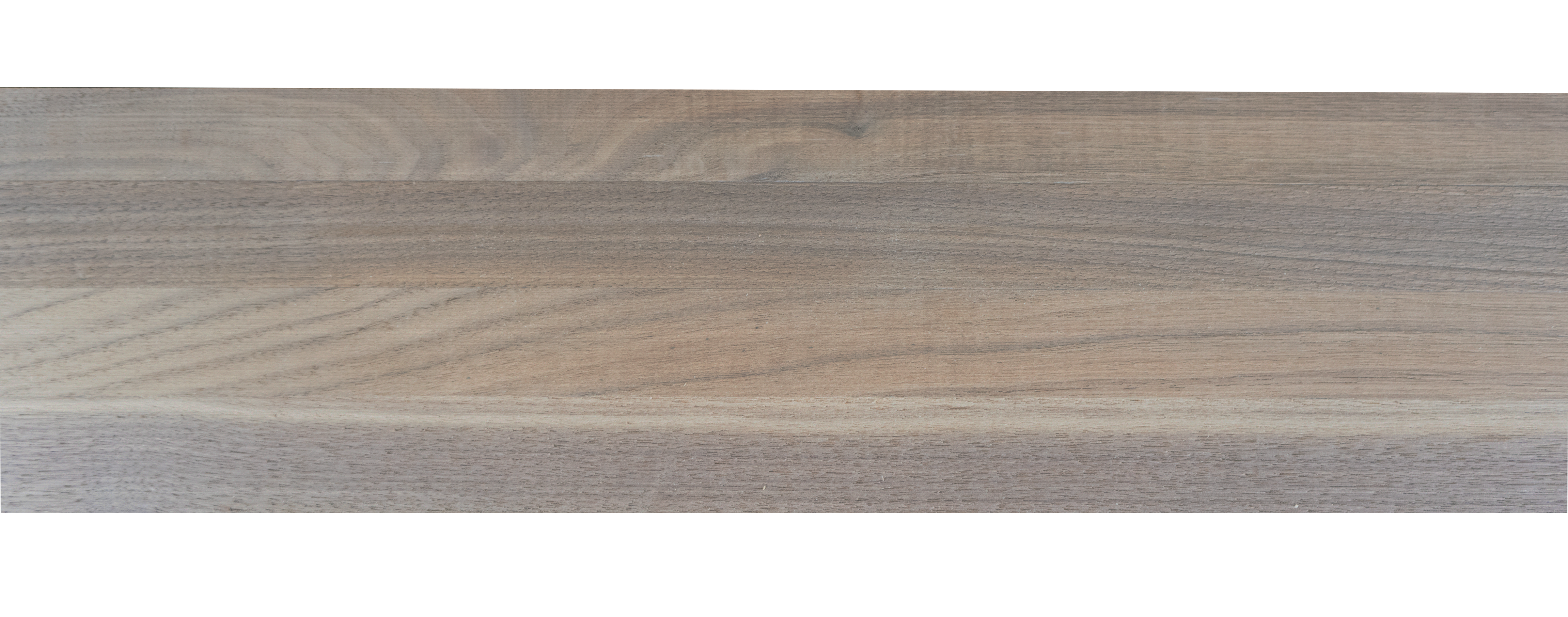
Example of Laminate:


Wood Types for

Western Red Cedar

Characteristics of Western Red Cedar

Hardness

  • Very soft wood - least dense option among commonly used species

  • Janka density rating of 350 lbf
    • The Janka Hardness Scale measures the durability of wood by determining the force needed to embed a steel ball into the wood. Find out more about this scale here.

Appearance

  • Reddish to pinkish-brown heartwood and pale yellow-white sapwood

  • Sometimes has darker red or brown streaks

  • Straight grain with uniform medium to coarse texture

  • Standard products will be laminated

Workability

  • Easy to work with using both hand and machine tools

  • May require fine sanding due to light density

Finishing

  • Can be painted or stained

  • Often treated with clear sealants to enhance appearance

Sustainability

  • Highly sustainable wood that comes from well-managed forests

  • 100% renewables and biodegradable

  • Low environmental impact due its lightweight nature, reducing transportation fuel consumption

Customization Options

  • Hand select services may be available for an additional fee

  • Please contact our customer service team for more information

Wood Types for

White Oak

Characteristics of White Oak

Hardness

  • Durable option with a Janka density rating of 1360 lbf
    • The Janka Hardness Scale measures the durability of wood by determining the force needed to embed a steel ball into the wood. Find out more about this scale here.

Appearance

  • Light beige to olive brown hues

  • Straight grain with medium to coarse texture

  • Tighter grain pattern than red oak

  • Color variation may occur

  • Standard products will be laminated

Workability

  • Easy to work with, but slightly harder than red oak

Finishing

  • Best suited for staining

Sustainability

  • Abundant wood type and sustainable option

Customization Options

  • Hand select services may be available for an additional fee. Some common requests are:
    • Darker coloring

    • Color matching

  • Please contact our customer service team for more information

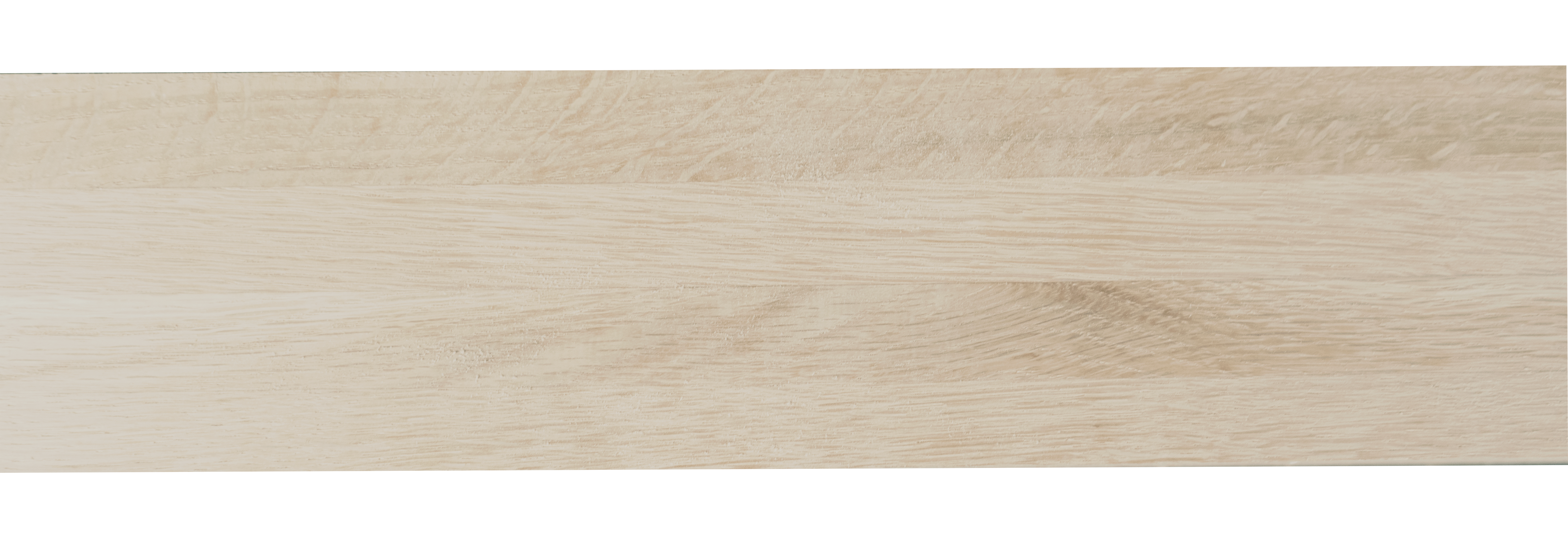
Example of Laminate: